Earth just had its 3rd-hottest year on record, latest climate report finds
Aug 15, 2026, 5:00 AM

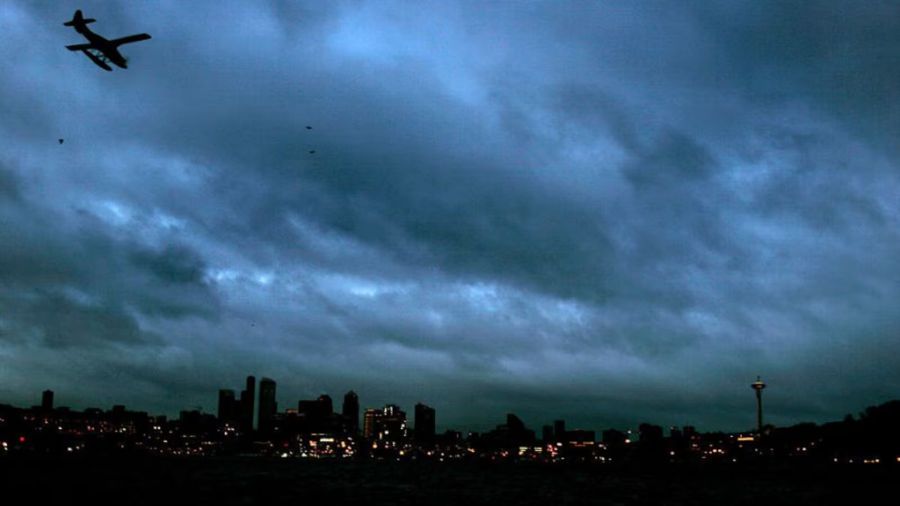
The Space Needle flies an American flag as the sun sets through wildfire smoke. (Photo: Lindsey Wasson, Getty Images)
(Photo: Lindsey Wasson, Getty Images)
The American Meteorological Society (AMS) just released the 36th annual State of the Climate report. The report has a number of highlights regarding the warming planet, both on land and at sea.
The AMS advances atmospheric and related sciences, technologies, applications, and services for the benefit of society as a whole. Founded in 1919, the AMS has a membership of about 12,000 professionals, students, and weather enthusiasts. The State of the Climate report involved more than 600 scientists from 60 countries worldwide.
Temperature results:
A big finding was that the average global temperatures both on land and in the oceans were the third highest in the record dating back to 1850. Last year was only lower than 2023 and 2024, the latter holding the all-time record.
The last three back-to-back-to-back years were the warmest ever on record. The report noted the last 11 years (2015-2025) were the 11 warmest on record, again going back to 1850.
The primary reason behind the record global temperatures was the three main greenhouse gases: carbon dioxide (CO2), methane, and nitrous oxide, all of which hit record average highs. For CO2, the global average level reached 425.6 parts per million, a 53% increase from the late 1800s pre-industrial level of about 278 parts per million. The rise in the amount of CO2 globally has grown more sharply since the 1960s.
North America, including the United States, was the fourth warmest in its 116-year record. Around the world, Europe reported its warmest year ever, while Russia, China, the Republic of Korea, and Argentina each noted their second warmest year ever.
A recent study by researcher Dr. Yupong Guan found that from the 1950s to 2011, global summers have grown 3.4 days longer per decade, leaving the other three seasons shorter. The annual AMS State of the Climate reports so far this century reflect this continued warming of the planet with longer summers, and overall warmer temperatures for all four seasons.
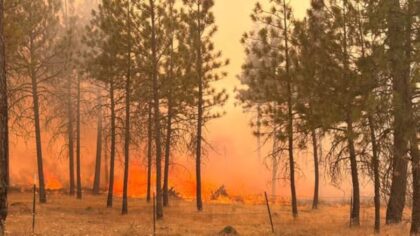
The longer, warmer summers have also led to more heat waves and wildfires around the globe. From May through September in Canada, record-breaking heatwaves and drought conditions led to the second-worst wildfire season on record. The hundreds of wildfires produced smoke that spread south into the U.S.
The oceans:
Global average ocean temperatures also reached their warmest level on record in 2025, surpassing the previous all-time record in 2024. These warmer ocean temperatures helped fuel tropical cyclones (e.g., hurricanes) around the globe, along with more intense storms.
There were 97 named tropical cyclones worldwide in 2025. In the North Atlantic, Hurricane Melissa was the strongest globally as a category five storm, with winds peaking at 165 knots (190 mph). Melissa was also the latest calendar category five hurricane in late October. The storm claimed 95 lives in the Caribbean region and resulted in at least $12 billion in damage.
Scientists behind the State of the Climate report follow 58 glaciers around the globe, all losing ice again for the 38th straight year. About 41% of the loss by glaciers worldwide since 1976 has occurred in the past decade.
In the Polar Regions, Antarctica had its warmest year since the start of records in 1979. The northern hemisphere Arctic region observed its second warmest year dating back to 1900 when records began. Overall, Arctic surface air temperatures have been rising close to three times faster compared with the remainder of the planet.
Global mean sea levels also climbed to their highest ever on record for the 14th straight year, according to the report. Mean sea levels in 2025 were about four and a third of an inch higher than the 1993 average. The expansion of ocean waters due to warmer sea temperatures and melt from glaciers and ice sheets once again contributed to the higher sea levels.
RELATED STORIES

More available warm moisture results
Warmer air and oceans mean more water vapor available in the atmosphere, which often produces heavier rainfall events, resulting in more floods and flash floods. One good example was the Texas Hill Country heavy rainfall event around the Fourth of July and massive flash flood on the Guadalupe River, exceeding a 1-in-1000 rainfall event probability. More than 135 lives were lost in that flash flood.
“The State of the Climate report is a comprehensive, collaborative international effort to assess annual metrics for the atmosphere, oceans, and cryosphere,” said American Meteorological Society President Alan Sealls. “It’s peer-reviewed data that paints a global picture of where we are, compared to benchmarks, and how fast things are changing. Consider it analogous to your annual health assessment from your physician. The State of the Climate connects to the health of all ecosystems. It presents critical measurements and trends which inform agencies, communities, businesses, and individuals for long-term planning.”
Ted Buehner is the KIRO Newsradio meteorologist. Follow him on X and Bluesky. Read more of his stories here.