The unlikely lasting legacy, melody from the Bon Marché
Sep 14, 2016, 5:26 AM | Updated: Sep 30, 2019, 3:14 pm

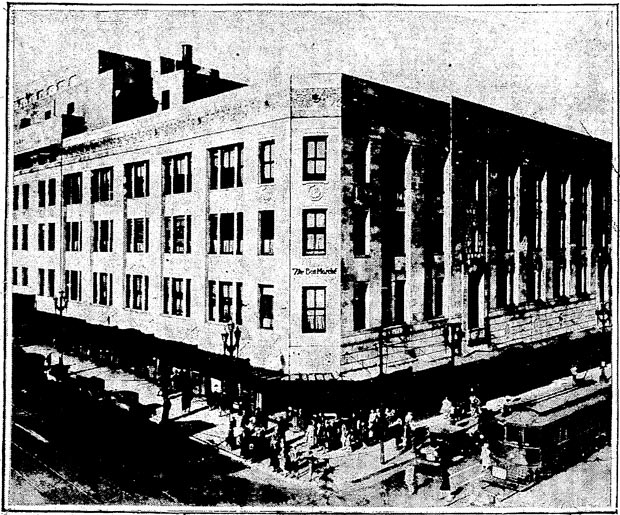
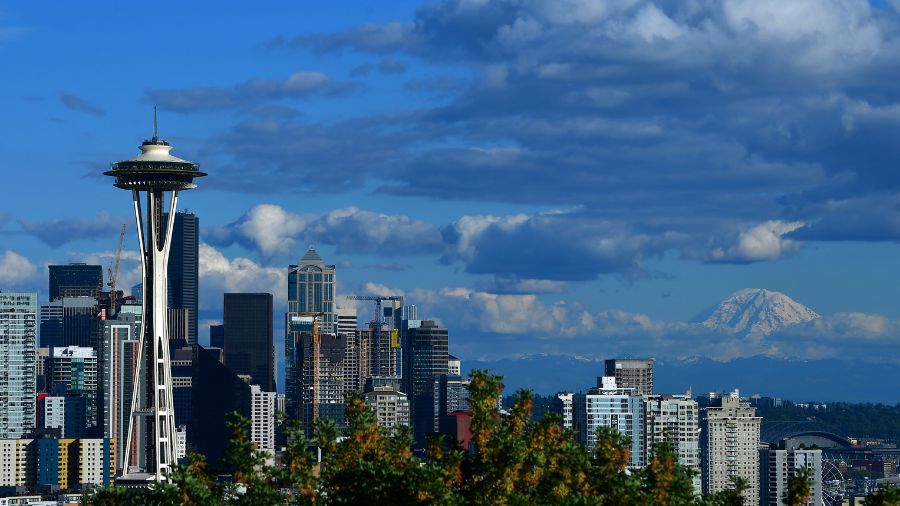
The news broke 12 years ago this week on September 14, 2004: mega chain Macy’s was dumping the old Bon Marche name from its Pacific Northwest department store locations. Actually, the “Marche” part had been dumped a year earlier, when the stores became known, awkwardly, as Bon-Macy’s in 2003.
Either way, a retail name that had been familiar and trusted around here since 1890 was officially on its way out. Final ceremonies marking the switch to Macy’s would ultimately take place in March 2005, though some locals still stubbornly call it “The Bon.”
A series of mergers and acquisitions of multiple regional department stores was to blame for the disappearance of the Bon Marche name. It was cheaper for Macy’s to name all the various department store chains it owned around the US the same thing, and then consolidate advertising, promotions and other activities that were previously regional matters.
And that should be the end of the story, right? That’ll be the day-o.
The sound of Bon Marche
While the “Bon Marche” name disappeared a long time ago, an ad campaign created in Seattle in 1991 lives on in the hearts, minds, and earworms of hundreds of thousands of Northwest residents.
Brian Walter was the broadcast production coordinator at the Bon Marche back in the early 1990s. His job was to use TV and radio to get people to shop at the store, which had locations in Washington, Oregon, Idaho, Montana, and Utah. In particular, Walter needed help getting the word out about the annoyingly frequent event called the “One Day Sale.”
“There was one freelancer, and his name is Palmer Pettersen,” Walter said. “I hired him and said, ‘Okay, see if you can come up with a good idea [for] what to do with our ‘One Day Sale.’”
Pettersen, who’s worked in advertising in Seattle since the 1970s, met with Walter about the project, and then went away to brainstorm some ideas. He’s not sure exactly why, but he remembered an old song that a former colleague (the late Dick Friel) had often sung in the workplace, and how Friel would often change the lyrics to make a now-forgotten joke.
When Palmer Pettersen came back and showed Walter what he had in mind for the One Day Sale, Walter wasn’t sure what to think.
“I remember thinking this is either the most brilliant idea ever or it’s the stupidest idea ever, and I’m not quite sure which one it is,” Walter said.
What was the brilliance that Petersen had unleashed that day in Brian Walter’s office at The Bon? To dust off the old Harry Belafonte version of the “Banana Boat Song” and its catchy “Day-O!” refrain.
Somehow, like so many brilliant inspirations that, in retrospect, seem unlikely, it all just fit.
“It was a combination of coming straight out of the name of the sale they wanted to promote, ‘One Day only,’” and putting that together with the musical memory of [Dick Friel’s] comedy,” Pettersen said. “That’s how it came together.”
Pettersen’s presentation to Brian Walter included Pettersen himself singing the “One Day Sale” version of the song lyrics he’d penned.
“He was singing horribly,” Walter said. “I mean, he is a super-creative guy, but no one is gonna hire him to sing.”
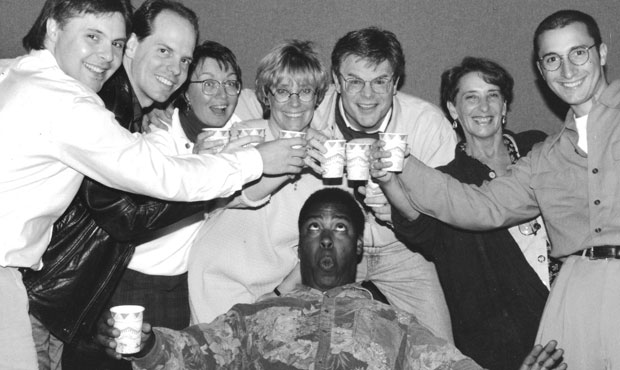
But Brian Walter and The Bon Marche took a chance on Pettersen’s idea. One of the best decisions, Walter says, was recruiting noted local actor and performer G. Valmont Thomas to sing the song and do the voice overs for the commercial.
“It was an instant breakout hit,” Walter said, and it had some serious staying power.
Walter says they kept evolving the various TV and radio commercials over the years, but that they remained true to the original concept for about a decade.
“We just kept on pounding it because everybody knew it,” Walter said. “Now, you would say, did everybody love it? No, not everybody loved it, but everybody knew it.
The loss of The Bon Marche name also meant shutting down all the local marketing and promotions efforts (including a series of radio ads with John Curley), and the drying up of all those local jobs and contracts. Like so much memorable Pacific Northwest advertising from the late 20th century, the “Day-O” campaign was locally grown, Walter says. Well, except for one thing.
“The only thing that wasn’t local is that since we didn’t want legal to come after me and [for me to] lose my job, we had to negotiate the rights and actually pay the Harry Belafonte people who owned that arrangement of that song,” Walter said. “We had to pay them $25,000 a year for the rights to that.”
“It was so, so worth it.”
Walter says the “Day-O” campaign was a success, and it also reached far beyond the customers who they were trying to draw into the store.
“There was a whole generation of kids who went to elementary school [in the 1990s] and that’s where you learned the ‘Banana Boat Song,’” Walter said. “Teachers for the first time ever were having to compete with the ubiquity and frequency of our commercials.”
It had a unique effect. Walter says one teacher called and left him a voicemail message.
“She [said], ‘We’re teaching the kids the ‘Banana Boat Song, so here are our first graders and we’re like, ‘Okay kids, and it’s, ‘Come Mister Talisman, tally me bananas.’”
And then, the teacher continued, instead of singing the correct lyrics (“Daylight come and me wanna go home), “’all the kids in unison chime, ‘One day only at the Bon Marche.’”
Nowadays, some people even credit the popularity of Seattle Mariners’ player Dae Ho Lee, in part, to the persistent memories of the “Day-O” campaign. A short recording of the Harry Belafonte refrain is played at Safeco Field whenever Lee is at bat.
A quarter-century after it was first created and more than a decade after it left the airwaves, the “Day-O” campaign remains something of a touchstone for each of the men who brought it into being.
“It’s the one thing that when you go to parties and say you’re in advertising, and someone asks, ‘What have I heard that you’ve done?’ … that was the one thing that really jumped out,” said Pettersen, who still works as a freelancer in the advertising industry.
Brian Walter, who now runs a company called Extreme Meetings, believes the One Day Sale commercials may end up becoming what he’s most remembered for.
“If I’m gonna put something on my tombstone, that’s it,” Walter said. “’Along with Palmer Pettersen, [Brian Walter] helped shepherd “Day-O” into the earworms of the Northwest.’”
Follow @https://twitter.com/feliksbanel