Harger: 3 bills could rewrite CPS rules that failed 9-year-old boy living in Aurora Ave. tent
Jan 26, 2026, 7:35 AM | Updated: 3:12 pm

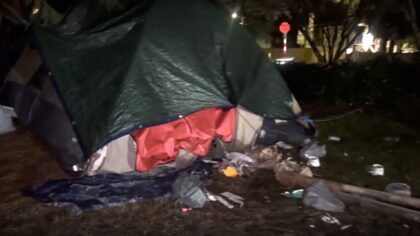
A photo of the tent the 9-year-old boy was living in with his mother along Aurora Avenue in Seattle. (Photo courtesy of Seattle's Morning News)
(Photo courtesy of Seattle's Morning News)
Tomorrow, there’s a hearing in Olympia that could change what happened to the boy in the tent.
If you’ve been following KIRO Newsradio’s reporting, you know the story. A 9-year-old lived for months in a fentanyl-filled tent off Aurora Avenue. His mother smoked it while he was inside. She brought strangers back to the tent while he waited in nearby bushes. Caseworkers visited. Police visited. They saw everything. They documented it. And they walked away.
Why? Because under the current law, the boy was not in “imminent physical harm.”
Here’s the problem. That phrase isn’t defined anywhere in the statute. So caseworkers read it as narrowly as possible. Unless the child is actively being hurt, unless there’s a body, the system says it can’t act.
RELATED STORIES


Three bills in the legislature would try to fix this
They’re not the same. Let me walk you through them.
HB 2511 is the most straightforward. It simply defines what “imminent physical harm” means. Right now, the law uses the phrase, but never explains it. This bill says it includes things like exposure to unsafe conditions, a caregiver impaired by drugs or illicit substances in a child’s environment.
Every single one of those things existed in that tent. If this definition had been on the books, caseworkers would’ve had clear authority to act. They wouldn’t have been guessing.
The hearing for HB 2511 is Tuesday. If you care about this, that’s your window.
HB 1092
HB 1092 goes a step further. It says if a parent is using hard drugs like fentanyl or meth around a child, that’s presumed to be grounds for removal. Not automatic removal, but presumed. The parent can make their case, but the burden shifts. And if a child is removed for drug exposure, the parent has to show six months of sobriety before reunification. Not just promises. Documentation.
Both bills are sponsored by Republican representatives. Both have attracted bipartisan support. Child safety shouldn’t be a partisan issue. It shouldn’t matter whether a bill has an R or a D next to the name. What should matter is whether it protects kids. But Democrats control the legislature. So whether these bills get a fair hearing or quietly die in committee will tell us a lot about how serious Olympia is about fixing this.
Then there’s HB 2497, sponsored by Democrats. This one takes a different approach. It adds more court oversight for young children. It expands legal help for parents. It funds public health nurses and referrals to community services.
Those aren’t bad things. But here’s what you’ll notice if you read it closely: it doesn’t change the standard for when a child can be removed. It doesn’t address what happens when a family is offered help and says no.
Here’s what we know. Critical incidents are child deaths or near-deaths in families already known to the child welfare system. These aren’t random tragedies. These are kids the state knew about. There were 51 in 2023. There were 49 in 2024. And through just the first nine months of 2025, there were 45. That includes 22 in the first quarter alone. The year before, that same quarter had nine.
Something is very wrong.
The question for Olympia is simple: are we going to fix the actual problem, or just wrap more programs around it and hope for the best?
Charlie Harger is the host of “Seattle’s Morning News” on KIRO Newsradio. You can read more of his stories and commentaries here. Follow Charlie on X and email him here.