Western Washington on track for one of the driest Januarys on record
Jan 25, 2025, 6:00 AM | Updated: Jan 27, 2025, 8:22 am

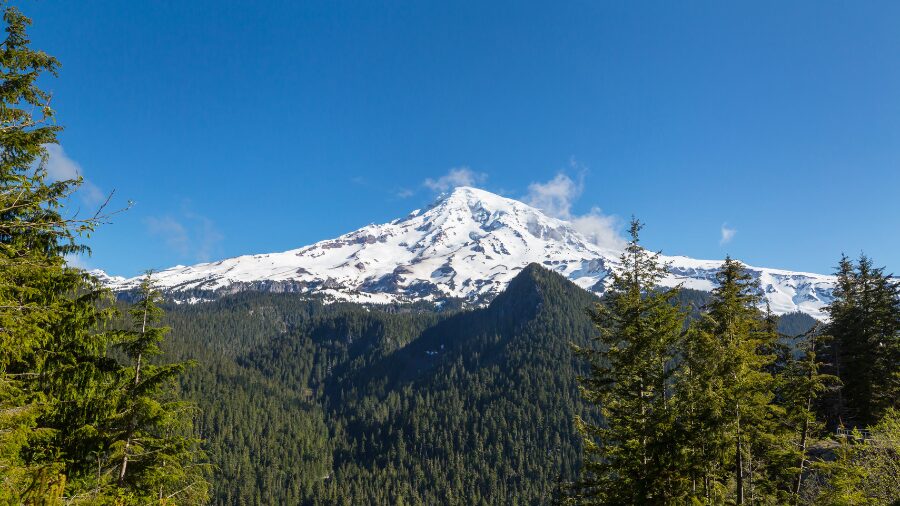
Seattle, including the Space Needle, and Mount Rainier can be seen on a sunny, dry day in January 2025. (Photo: Julia Dallas, MyNorthwest)
(Photo: Julia Dallas, MyNorthwest)
Does it seem like it has been an unusually dry January? The last significant rainfall in Western Washington was back on Jan. 10.
Bellingham had just over a half inch of rain; Forks barely more than 0.9 inches, Hoquiam saw 0.7 inches, and Olympia and Seattle a bit over 0.1 inches of rain.
Since then, it has been a dry January with plenty of cool sunshine and areas of fog. At this point, much of Western Washington is on track to finish the month in the top five driest Januarys on record.
Some readers and listeners are now asking what this dry January means for the rest of the year.
More from Ted Buehner: Boxing Day earthquake, which killed about 250,000, serves as a reminder to be ready
Where is the moisture during this dry January?
During La Niña winters, Western Washington tends to be wetter and cooler than average. In recent weeks, the cooler part has certainly been the case. But where is the moisture?
The primary storm track during typical La Niña winters drives Pacific weather systems into the region with rain in the lowlands and snow in the mountains. That was the case during much of December and into early January.
Yet, it’s not uncommon for that storm track to buckle and head north into Alaska and the Yukon with high pressure aloft residing just off the Pacific Northwest coast. That is the weather pattern that has created the recent dry, cool weather.
In the meantime, that storm track has surged cold air into the central and eastern portions of the nation, including the recent unusual snowfall along the Gulf Coast region from Texas to the Florida Panhandle.
At some point, the current weather pattern will break down. If longer-range forecast charts are on track, that breakdown and return to milder, wetter conditions may come to fruition at the end of this month – next Thursday or Friday. The transition back to milder conditions sometimes results in a brief period of lowland snow. Stay tuned for how that scenario will play out.
The latest weather outlooks into February continue to show cooler and wetter than average conditions. In fact, it is possible early in February, a surge of colder air from Western Canada could sweep through Western Washington and, this time, be accompanied by moisture for a threat of lowland snow.
Snowpack got a head start early ahead of this dry January
In the mountains, snow fell for much of the latter part of November into early this month, giving the snowpack a good head start for the season. Since then, though, little, if any, fresh snow has fallen.
According to the latest Northwest Avalanche Center snowpack report, most Cascades sites, including Stevens Pass, Snoqualmie Pass and Mt. Baker, were in the 70 to 90% of average while White Pass was close to 125% of average. The water equivalent in the snow this week showed a range of 65 to 85% of average in the Northern and Central Cascades, while the Southern Cascades was around 110% of average.
The mountain snowpack usually peaks around April 1, so there is time to resume piling up the snow. In fact, the latest seasonal weather outlook for February into April continues to reflect good odds on cooler and wetter conditions for the region, good news for the mountain snowpack.
The seasonal outlook for this summer also continues to tip the odds for warmer and drier-than-average conditions, a pattern that has been prevalent so far this century.
Weather and technology: Will forecasts soon be done without humans?
First 5 p.m. sunset of 2025 is coming soon
The days are now growing longer by about 2.5 minutes per day. The first 5 p.m. sunset of the year is set for Saturday. By the end of the month, daylight hours will surpass 9.5 half hours, a sharp contrast from the 8 hours and 20 minutes seen on the shortest day of the year back on the winter solstice in December.
Enjoy the mid-winter sunshine that is expected to continue through the middle of next week. After that, anticipate more active weather to resume heading into February.
Ted Buehner is the KIRO Newsradio meteorologist. You can read more of Ted’s stories here and follow him on X.