Harger: WA ignored its own plastic bag ban study. Now fees are increasing anyway
Dec 3, 2025, 8:02 AM | Updated: 3:34 pm
“Follow the science” became a familiar refrain in recent years. Data over feelings. Evidence-based policy making.
But when Washington commissioned a study on its plastic bag ban and the science came back with inconvenient results, officials decided to disregard their own research.
Plastic bag fee increasing despite study findings
As reported in my commentary from two months ago, starting next month, the fee for thick reusable plastic bags will increase from eight cents to 12 cents. Factor in sales tax, and consumers will actually pay 13 cents per bag.
This fee increase comes despite a Washington State University (WSU) study commissioned by the state that found the current policy may be making plastic waste worse, not better.
RELATED STORIES


State agencies rebutted their own commissioned research
The Washington Departments of Commerce and Ecology enlisted WSU to study the effectiveness of the plastic bag ban. When WSU delivered its report, the agencies published it with an unusual addition: A four-page rebuttal explaining why their own commissioned study was wrong.
The agencies paid for independent research, received results they didn’t like, and then attached their contradictory opinions ahead of the actual scientific findings.
Study shows plastic waste increased 17% after ban
The WSU researchers found that after Washington’s 2021 plastic bag ban took effect, the number of bags distributed dropped by approximately 50%. However, total plastic use by weight increased 17%.
The reason? Thick reusable bags weigh approximately four times as much as the thin single-use bags they replaced. Fewer bags doesn’t mean less plastic.
The researchers’ recommendation was clear: Eliminate the thickness requirement and allow thin bags with a small fee. That approach would actually reduce plastic waste.
Agencies called the data ‘inconclusive’ without providing counter-evidence
In their rebuttal, Commerce and Ecology both called the data “inconclusive” and claimed the study lacked “robust” Washington-specific information.
The agencies argued researchers failed to consider “larger social, economic, and environmental implications,” though they remained vague about specifics. They mentioned “equity impacts” and “environmental justice concerns” without defining these terms or providing supporting data.
Most consumers don’t reuse bags enough to offset the environmental impact
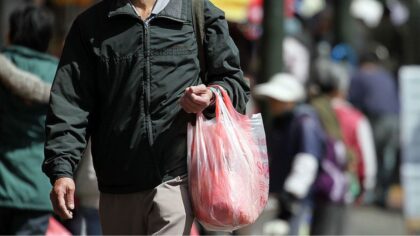
KIRO Newsradio traffic reporter Chris Sullivan reuses his thick bags religiously. That 9 a.m. pizza lunch isn’t going to wrap itself. But Sullivan appears to be the exception.
A 2014 California study found consumers need to reuse thick bags at least eight times to match the environmental impact of a single thin bag. The WSU researchers found that only about 30% of Washington consumers reused bags after the ban took effect.
WA’s plastic pile nearly doubled
Before the ban, Washington’s annual grocery bag waste would fill a football field about 22 feet high. With thick bags under the current law? The same football field now stands 38 feet high. That’s nearly double the plastic waste.
The policy designed to reduce plastic waste has made the problem significantly worse.
Thicker bags requirement delayed, not eliminated
The law originally scheduled a requirement for even thicker four-mil bags. State agencies are delaying that provision, but refuse to remove the thickness requirement entirely. That’s what the scientific research recommends.
When science disagrees, follow politics instead?
“Follow the science” worked as a governing principle until the science provided disagreeable results.
Everyone wants cleaner oceans and less waste. But when Washington commissions scientific studies on environmental policy, officials need to be willing to listen to what the research actually says, even when it contradicts their preferred narrative.
Charlie Harger is the host of “Seattle’s Morning News” on KIRO Newsradio. You can read more of his stories and commentaries here. Follow Charlie on X and email him here.