High overnight temperatures present unique dangers for community
Aug 16, 2023, 6:44 PM | Updated: 7:10 pm

Tracy Werthman, left, and Nikoma Echt, both of West Seattle, and their kids cool off at Alki Beach on June 29, 2021. An excessive heat warning was in effect at the time after record-breaking temperatures hit the region in Seattle. (Photo: Jason Redmond, AFP via Getty Images)
(Photo: Jason Redmond, AFP via Getty Images)
As Seattle deals with the hottest weather of the year, with temperatures reaching 95 degrees at Seattle-Tacoma International Airport (SEA) Tuesday, a state climatologist is warning about the coolest part of the day: overnight low temperatures.
Karin Bumbaco, Washington State’s Deputy Climatologist, said that while “high” temperatures in the 90’s aren’t “that” unusual this time of year, the late low temperatures are.
More Puget Sound weather: Seattle sees its hottest day of 2023 Tuesday; break from heat comes this week
“So just the other day, our temperature only cooled to 71 degrees at Seattle airport. And we’ve only seen that two other times in the historical record where our low temperatures have not dropped below 70 degrees,” Bumbaco said. “So that was a really warm night for us, and we’re seeing an increasing trend of higher minimum temperatures overnight in the summertime, really throughout the whole region and state.”
Bumbaco explains the overnight cooling comes from the breeze from Puget Sound and is a big reason why people in the region don’t have air conditioning.
The dangerous heat wave will continue this week as a strong ridge of high pressure remains in place, with most of the region under heat-related advisories and warnings. High temperatures will be in the 90s around the Puget Sound. Overnight lows will remain warm.
Temperatures will remain above average through Thursday, with excessive heat warnings lasting through the end of the day Wednesday.
“We’re seeing those minimum temperatures inch up over the years, we just not being able to really have any relief from the hot days,” Bumbaco noted. “So even if we’re which we haven’t seen that much change in our daytime temperatures if we look at our long-term trends because our overnight temperatures are warming, it makes our heat waves feel worse to people.”
These temperatures, combined with the duration of heat that is expected to continue through this week, will increasingly pose a heightened health risk, especially for those without adequate air conditioning.
“As we see it get warmer at night, we could see more adverse health outcomes, especially for vulnerable groups that don’t have air conditioning or aren’t used to the temperature,” Bumbaco noted. “These vulnerable groups, like the elderly and young children, don’t tolerate the heat as well. But also, everyone is generally just not as acclimated to it here.”
Tips to beat the heat: Where to find cooling centers around Washington, heat wave forecasted
This acclimation is why some parts of the country can get hotter than the Pacific Northwest, reaching well past 1oo degrees, but it can still feel incredibly hot in the low 90s in Seattle.
“Sometimes, I do talk about our warming temperatures on a national scale,” Bumbaco said. “So with colleagues that live in Texas or Florida, and they sort of think, ‘Wow, you know, you’re only talking about a minimum temperature of 70 degrees. Like, that’s no big deal.’ We’re from where we’re from, but it does make a difference in terms of what your body is used to.”
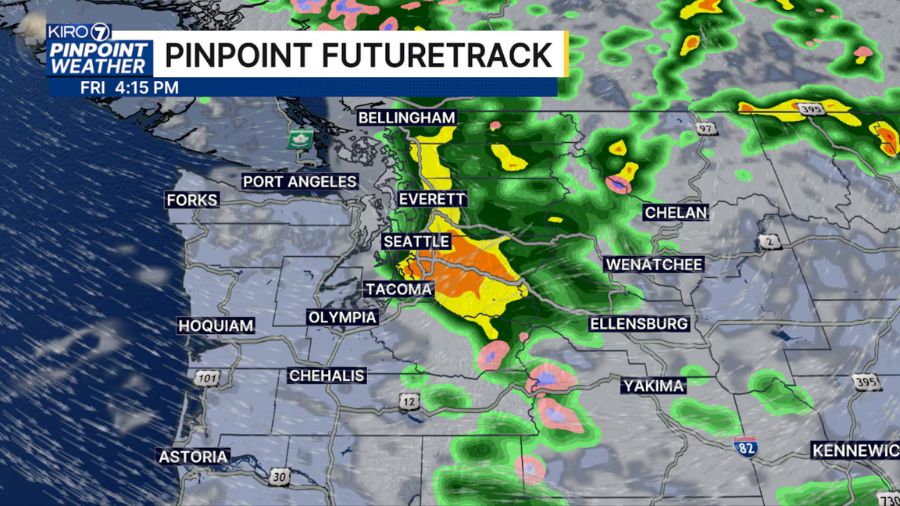
KIRO 7 meteorologist Nick Allard said temperatures in the 90s and high 80s will continue. It will be much cooler on Friday and through the weekend, with highs in the 70s as sunny skies will continue.
Why it has been warm overnight
As to why the temperatures have been remaining unusually high overnight, the answer according to Bumbaco, is simple: Climate change.
The more carbon dioxide and other greenhouse gases in our atmosphere, the harder for long-wave heat radiation to escape the atmosphere overnight. Bumbaco explains that the carbon dioxide in the atmosphere is acting as a blanket to kind of warming our atmosphere, especially at nighttime, with increased water vapor acting to keep those temperatures warmer at night.