‘Boy in the tent’ turns 10 as mother reaches five months of sobriety in recovery-based shelter
May 12, 2026, 5:00 AM

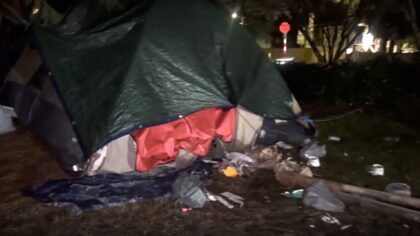
The tent the 9-year-old boy occupied with his mother on Aurora Avenue. (Photo courtesy of We Heart Seattle)
(Photo courtesy of We Heart Seattle)
The boy who spent months living in a fentanyl-filled tent off Aurora Avenue just celebrated his 10th birthday. He got a cake, gifts, and a haircut. Right now, his biggest concern is finding a little carrier to hold all of his toy cars.
His mother, who was deep in fentanyl addiction while her son lived surrounded by human waste, used condoms and drug smoke, is five months into her fentanyl recovery in a sobriety-based shelter.
They’re both living in a facility run by The More We Love, a Seattle-based nonprofit that requires sobriety as a condition for staying. Not managed addiction. Not harm reduction. Recovery.
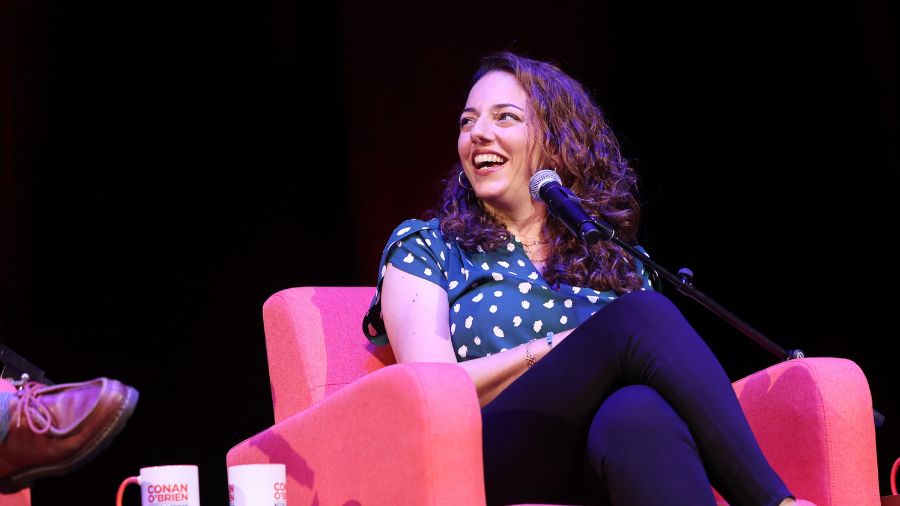
“When he’s at our space, he just says, ‘I feel like I’m at home,'” said Kristine Moreland, founder of The More We Love, who joined “Seattle’s Morning News” on KIRO Newsradio.
KIRO Newsradio first exposed the boy’s living conditions in December. Show hosts have been deliberately quiet about the family for months because the situation was fragile, and we didn’t want to jeopardize their progress. This is the first public update on where the boy and his mother ended up.
Moreland said the KIRO Newsradio investigation was the turning point.
“I’m so grateful that you put that article out there,” Moreland said. “I want to just commend you guys for bringing light to that very difficult circumstance, because of you, the intervention needed to take place to get that mom and child safe.”
How CPS left a child in an Aurora Avenue fentanyl tent
For months, a then 9-year-old boy lived in a tent just blocks off Aurora Avenue in North Seattle with his parents. His mother smoked fentanyl with him inside. She made him wait in nearby bushes while she turned tricks with strangers from Aurora. The tent was filled with rotting food, rats, and bottles of urine.
Child Protective Services and the Seattle Police Department visited multiple times. They documented the conditions. Under Washington’s Keeping Families Together Act, passed in 2023, the standard for removing a child requires “imminent physical harm.” CPS determined the boy was not in immediate danger and walked away.
After the KIRO Newsradio investigation was published, officials returned within hours. Shortly after, the tent was abandoned. The boy was gone.
Months of visits produced nothing. One news story produced action.
New Year’s Eve rescue by The More We Love
On New Year’s Eve, SPD called The More We Love at 12:30 a.m. The boy and his mother had been located and needed a safe place. Moreland brought them into her facility by 1 a.m.
“She was in active addiction, but thankfully, she accepted our services,” Moreland said.
Sobriety, not harm reduction, at The More We Love shelter
The More We Love runs a 27-bed shelter for women and children in King County. Moreland describes the model as “low barrier to enter and high accountability to stay.” It’s a recovery-based approach that requires sobriety as a condition for staying, not the harm reduction framework that dominates King County’s publicly funded programs.
Under the harm reduction model that Seattle and King County have largely adopted, the goal is to reduce the risks of drug use rather than push for sobriety. That means free pipes, de facto safe injection sites, and no pressure to get clean. Officials have defended the approach as evidence-based. But critics have argued it keeps people in a cycle of managed addiction rather than offering a real way out. Research published in the Journal of Addiction Medicine shows harm reduction and sobriety-based recovery produce comparable outcomes.
Yet King County continues to fund harm reduction as its primary strategy, spending millions annually on programs that do not require participants to work toward sobriety or self-sufficiency. Critics said the result is a system that houses people in their addiction indefinitely, with no clear pathway out. In supportive housing programs funded under this model, residents can continue using drugs in their units with no requirement to pursue treatment, attend counseling, or maintain sobriety.
The More We Love offered a way out. The mother took it.
Seattle mother five months sober after Aurora tent rescue
The mother is now five months into recovery. Moreland called her “an incredibly brave, resilient, beautiful woman.”
The boy is thriving. He wants his haircut. He likes taking showers. He’s doing the things other 10-year-old boys do. Moreland’s team celebrated his birthday with a party at the shelter.
“I can’t tell you what that means,” Moreland said, “because a lot of the community said things to me like, ‘Just leave him alone.'”
The boy had never been enrolled in school. He is now attending online school while staying with The More We Love, and receiving behavioral health services for both the boy and his mother.
He’s “Right now, he’s just looking for a little carrier to put all of his cars in,” Moreland said. “The things that he cares about are what other 10-year-old boys care about.”
RELATED STORIES


Keeping Families Together Act left boy in tent
Moreland said she visited the tent repeatedly before the family accepted help. The man in the tent, who Moreland said was exploiting the mother, wanted her gone. Most of them do, she said.
“They didn’t need to be condemned for the conditions that they were living in,” Moreland said. “They didn’t need to be shamed for any of that. They needed somebody to show up.”
The Keeping Families Together Act allowed the system to review this family and determine that the boy was safe. KIRO Newsradio’s investigation prompted three bills in Olympia aimed at rewriting the CPS rules that failed him. None of them passed. A state legislator told KIRO Newsradio the act has contributed to more than 100 child fatalities and near-fatalities in just two years. The law remains unchanged.
For this boy, it took a news story, a nonprofit that demands sobriety, and a mother who finally said yes.
Sobriety-based recovery model shows results in Seattle
Moreland said the boy and his mother represent what becomes possible when people in crisis get the right kind of support.
“When we show up differently for them, trust me, they show up differently for themselves,” Moreland said. “When we give them an opportunity to recover, to thrive, to feel loved, when we really wrap around services with them, they transform.”
She pointed to a woman she identified only as Miss Hannah, who came through The More We Love after escaping human trafficking. Hannah has been clean and sober for more than eight months and now works security on Capitol Hill. She calls Moreland nearly every day with referrals.
“She calls me and says, ‘I know somebody who needs help,'” Moreland said. “And that’s what The More We Love is about. It’s about being somebody’s constant.”
More information about The More We Love is available at TheMoreWeLove.org.
Charlie Harger is the host of “Seattle’s Morning News” on KIRO Newsradio. You can read more of his stories and commentaries here. Follow Charlie on X and email him here.